RBC One
Overview
RBC Investor Services was going through big changes. The company lost a major Canadian client and sold its overseas business to focus on Canada. Because of this, I was asked to rethink the client experience and improve the design and usability of the platform. The goal was to present these ideas to senior executives to get funding for a redesign.

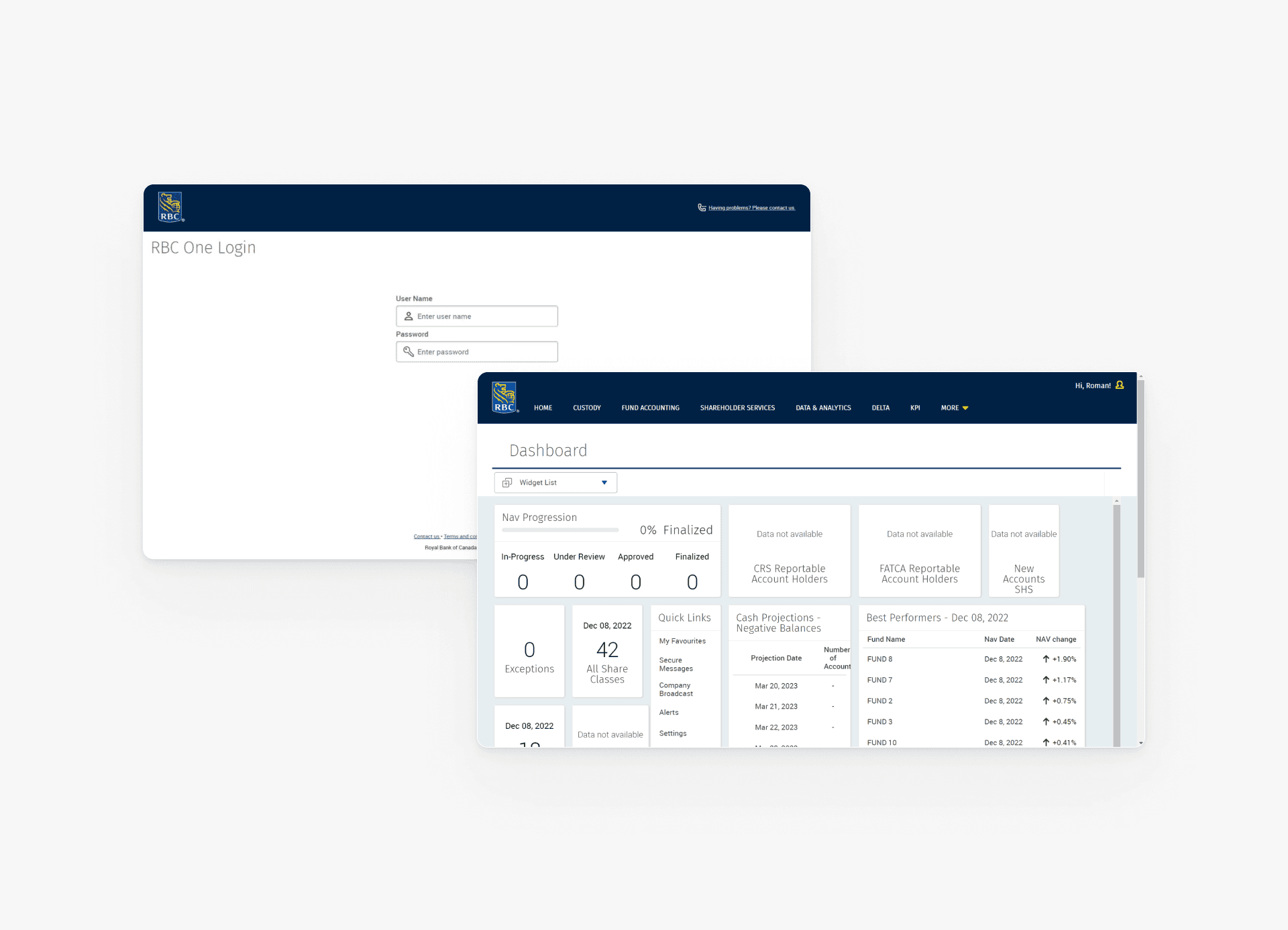
RBC One is a platform used by thousands of wealthy clients. It shows portfolio details, trade settlements, and other financial and business tools. Even though the platform is very important, its design had not been updated in over 10 years. It looked outdated and had many usability and accessibility problems.
Role
Product Designer
Challenges
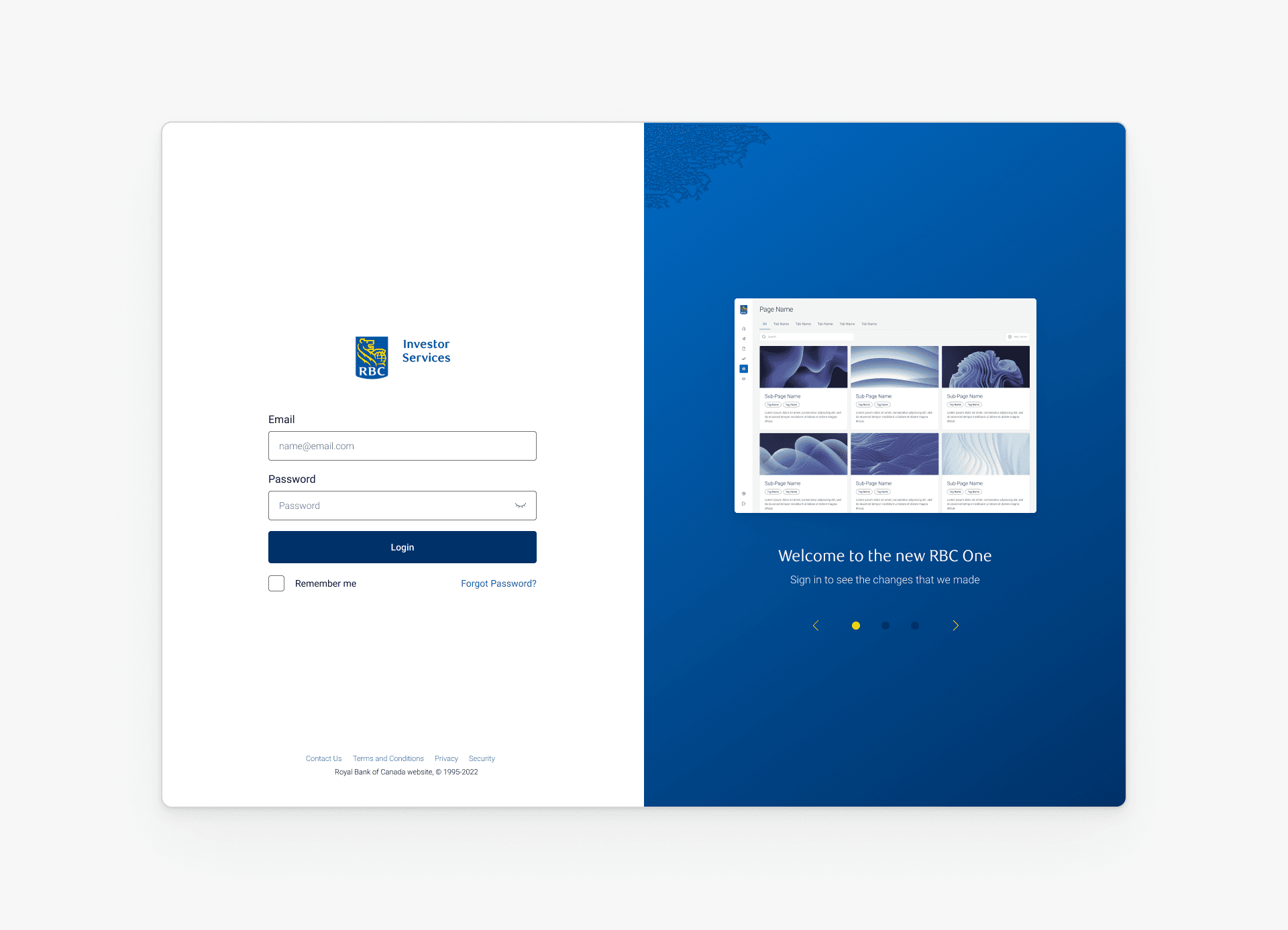
The design looked outdated and had visual bugs, which reduced trust and could turn off new clients during demos
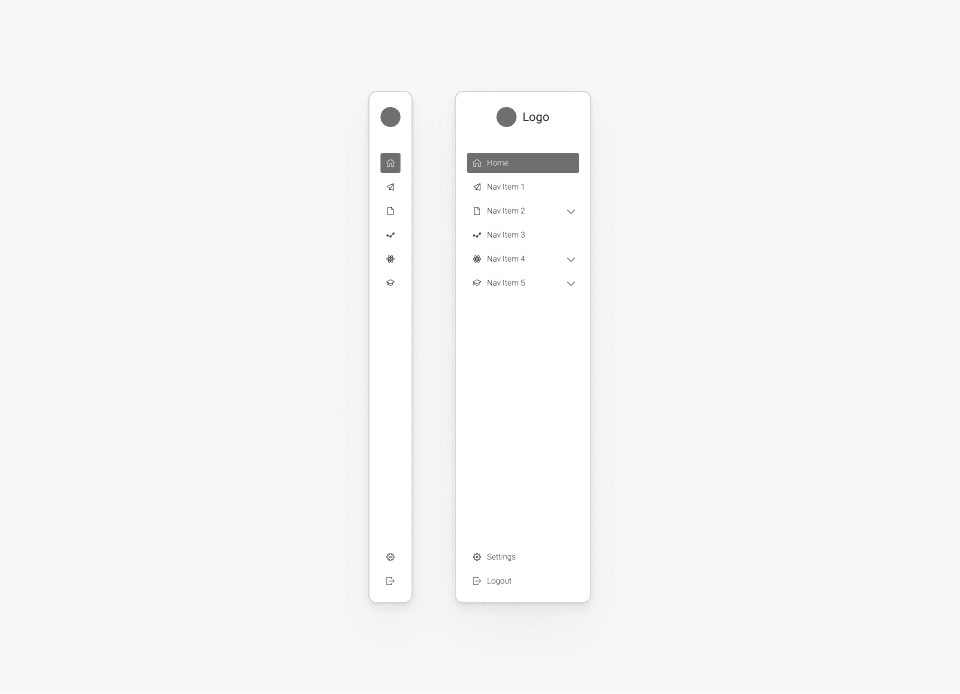
The main navigation had limited space, causing important links to be hidden under a “More” menu
Different users had different needs, but all users received the same experience regardless of their goals
Opportunity
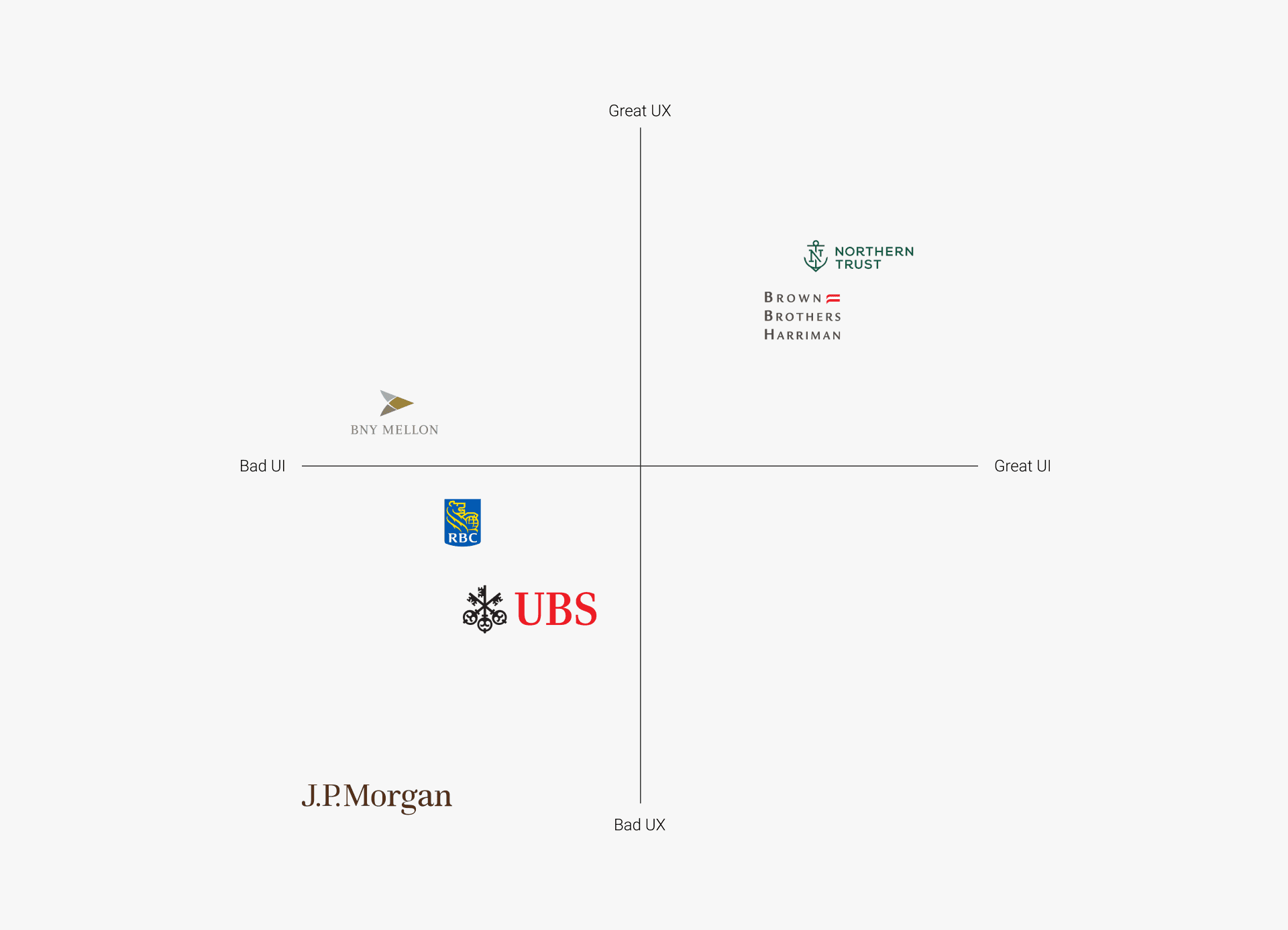
An important step was talking to people who used competitor platforms. I reviewed what worked well and what didn’t using a simple grading system. This helped me find UX and UI gaps in our platform, and the best ideas were used to shape the first designs.
I reviewed insights from experts, a portal audit, and competitor analysis to identify gaps and opportunities in RBC One
Gap A – Inadequate widgets
Small widget library with limited visualizations
Opportunity A – Comprehensive widgets
Create widgets for key pages with strong visualizations
Allow custom widgets for niche needs
Gap B – One-size-fits-all experience
Same dashboard for all users
Widgets cannot be rearranged
Opportunity B – Tailored experience
Design for different user personas
Let users move and resize widgets
Gap C – Too much customization
Too many options can overwhelm users
Opportunity C – Personalization over customization
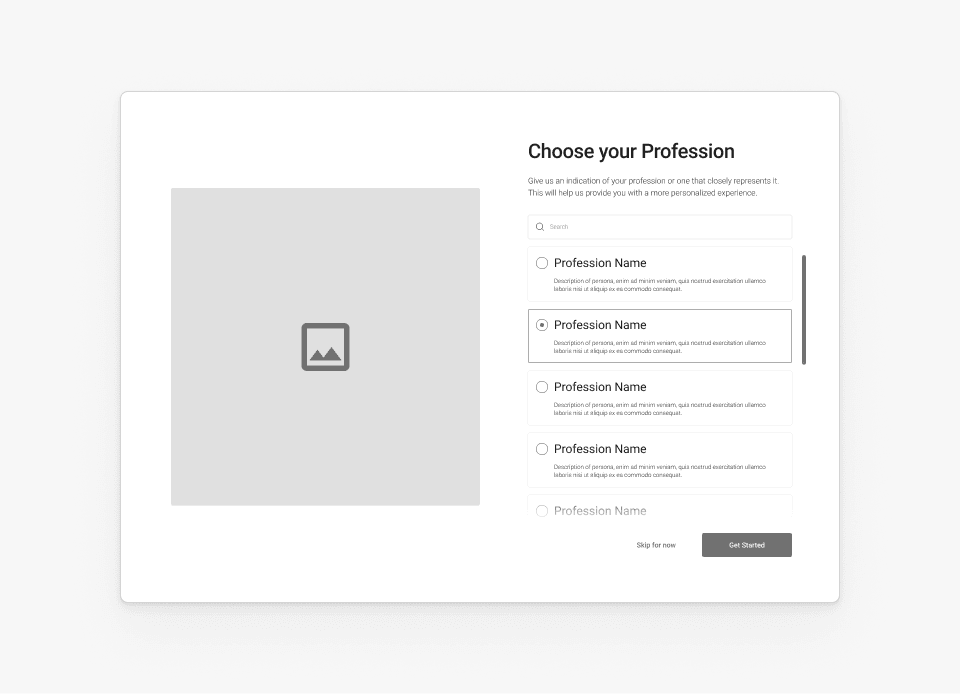
Use onboarding to select a persona
Provide a prebuilt dashboard that fits user needs
Design Process
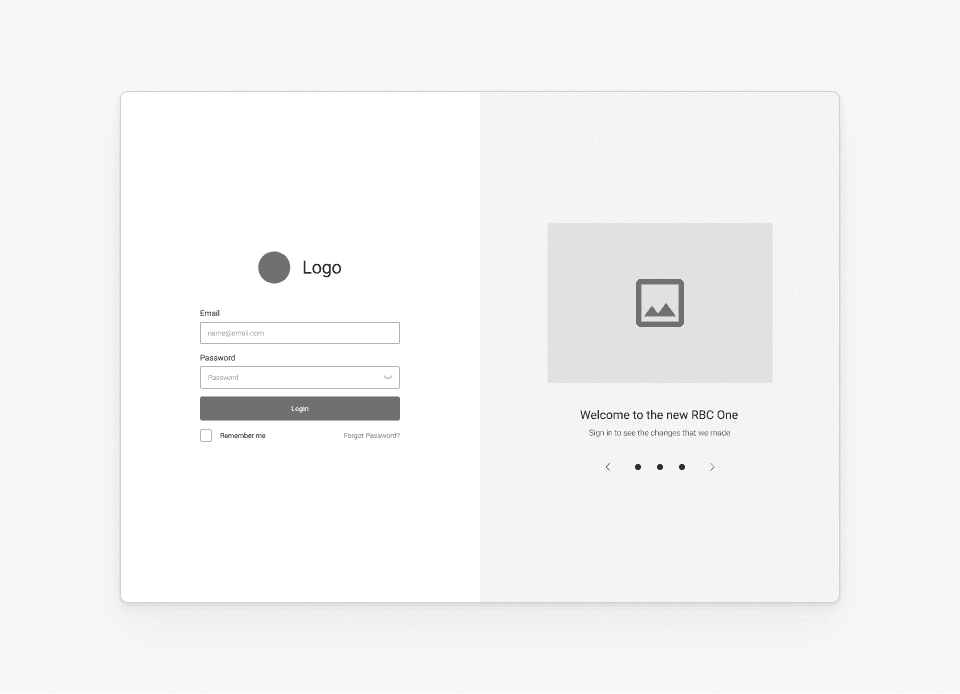
I regularly met with directors to share progress and gather feedback to make sure the work was on the right track. The mockups shown above are early versions and do not represent the final designs, which are not public.
Impact
The redesign made the platform easier to navigate and use, helping clients complete tasks more smoothly and with less confusion.
Result
Using all the previous work, I designed and refined mockups with feedback from the business team. This resulted in a reimagined RBC One home screen, onboarding experience, and an animation concept.
RBC One
Overview
RBC Investor Services was going through big changes. The company lost a major Canadian client and sold its overseas business to focus on Canada. Because of this, I was asked to rethink the client experience and improve the design and usability of the platform. The goal was to present these ideas to senior executives to get funding for a redesign.
RBC One is a platform used by thousands of wealthy clients. It shows portfolio details, trade settlements, and other financial and business tools. Even though the platform is very important, its design had not been updated in over 10 years. It looked outdated and had many usability and accessibility problems.
Role
Product Designer
Challenges
The design looked outdated and had visual bugs, which reduced trust and could turn off new clients during demos
The main navigation had limited space, causing important links to be hidden under a “More” menu
Different users had different needs, but all users received the same experience regardless of their goals
Opportunity
An important step was talking to people who used competitor platforms. I reviewed what worked well and what didn’t using a simple grading system. This helped me find UX and UI gaps in our platform, and the best ideas were used to shape the first designs.
I reviewed insights from experts, a portal audit, and competitor analysis to identify gaps and opportunities in RBC One
Gap A – Inadequate widgets
Small widget library with limited visualizations
Opportunity A – Comprehensive widgets
Create widgets for key pages with strong visualizations
Allow custom widgets for niche needs
Gap B – One-size-fits-all experience
Same dashboard for all users
Widgets cannot be rearranged
Opportunity B – Tailored experience
Design for different user personas
Let users move and resize widgets
Gap C – Too much customization
Too many options can overwhelm users
Opportunity C – Personalization over customization
Use onboarding to select a persona
Provide a prebuilt dashboard that fits user needs
Design Process
I regularly met with directors to share progress and gather feedback to make sure the work was on the right track. The mockups shown above are early versions and do not represent the final designs, which are not public.
Impact
The redesign made the platform easier to navigate and use, helping clients complete tasks more smoothly and with less confusion.
Result
Using all the previous work, I designed and refined mockups with feedback from the business team. This resulted in a reimagined RBC One home screen, onboarding experience, and an animation concept.